
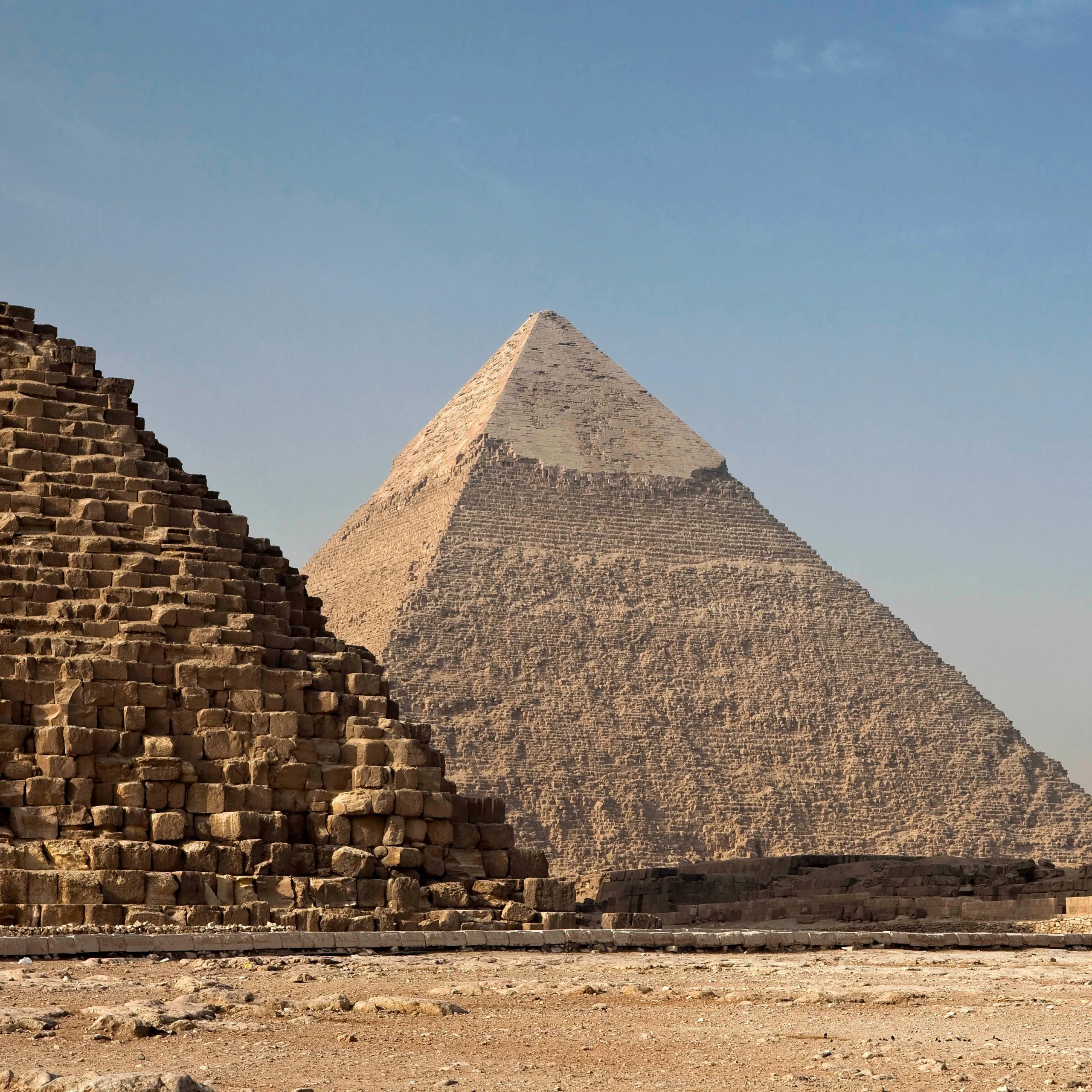

The Great Pyramid of King Khufu
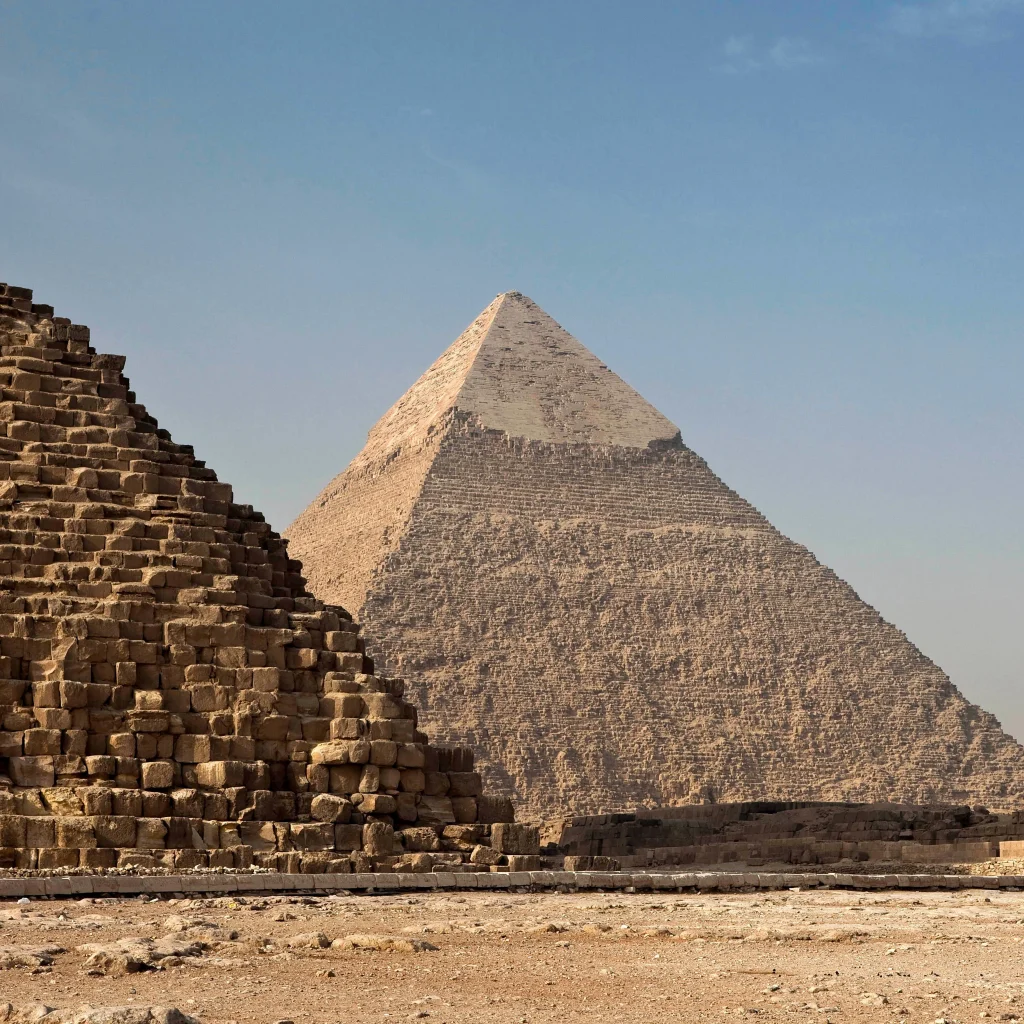
The Pyramid of Khufu is one of the most famous landmarks in the world and a lasting symbol of ancient Egyptian civilization. Located on the Giza Plateau near Cairo, it is the largest and most iconic of the three pyramids of Giza. The monument is also widely known as the Great Pyramid or the Pyramid of Cheops.
Who Was Pharaoh Khufu?
Khufu known in Greek as Cheops was an ancient Egyptian pharaoh who ruled during the Fourth Dynasty of the Old Kingdom, approximately from 2589 to 2566 BCE. He was the son of Pharaoh Sneferu, Egypt’s first great pyramid-builder, and inherited both a prosperous kingdom and an architectural ambition that would define the ancient world for millennia.
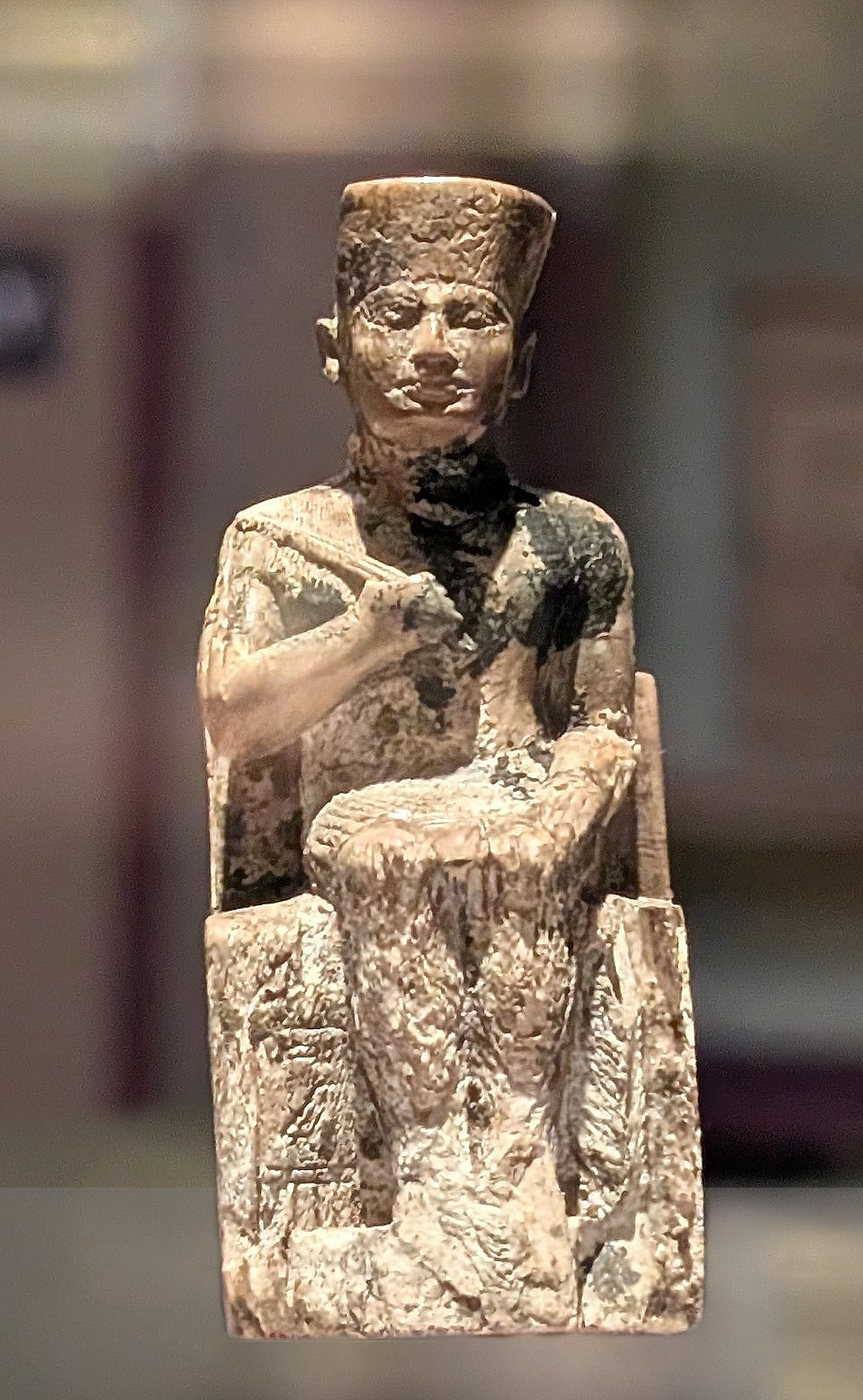
Little is known about Khufu’s character from surviving records. His only confirmed portrait is a small ivory statuette barely 7.5 centimeters tall, now housed in the Egyptian Museum in Cairo a striking irony for the man who commissioned the construction of the largest monument ever built. The Great Pyramid of Giza stands 146 meters tall, covers 13 acres at its base, and was assembled from approximately 2.3 million stone blocks weighing between 2.5 and 15 tons each.
Khufu’s reign was a demonstration of state organization on a scale ancient Egypt had never seen. Modern archaeology estimates that 20,000 to 30,000 workers not enslaved people, as was long believed, but organized laborers provided with food, housing, and medical care quarried and set those blocks over roughly 20 years. The pyramid’s base is leveled to within 2.1 centimeters of perfect, a precision that challenges modern engineering standards even today.
Beyond the pyramid, Khufu expanded Egypt’s trade networks into the Sinai Peninsula for turquoise and copper, and centralized royal authority in ways that shaped the Old Kingdom’s political structure for generations. Evidence of his administration survives in the papyri discovered at Wadi al-Jarf the world’s oldest known harbor, linked directly to the logistics of his building projects and one of the most significant archaeological finds of the 21st century.
His legacy endures not in royal texts or burial treasure his chamber was emptied long before modern excavation but in 146 meters of limestone that stood as the tallest human-made structure on Earth for nearly 3,800 years.
Planning to experience the Great Pyramid of King Khufu in person? Explore our Egypt tour packages from Cairo for a complete Egypt itinerary.
Pharaoh Khufu
Built for Pharaoh Khufu during Egypt’s Old Kingdom, the pyramid dates back to around 2580–2560 BCE. It originally stood at about 146 meters (481 feet), making it the tallest man-made structure in the world for thousands of years. Even today, its scale and precision continue to impress historians, archaeologists, and travelers from around the globe.
The pyramid covers a base area of roughly 13 acres and was constructed using more than 2.3 million limestone blocks, many of which weigh several tons. This extraordinary achievement is one of the clearest examples of ancient Egypt’s engineering brilliance. Visitors planning to explore the Pyramid of Khufu should allow around 2 to 3 hours to fully appreciate its history, scale, and importance.
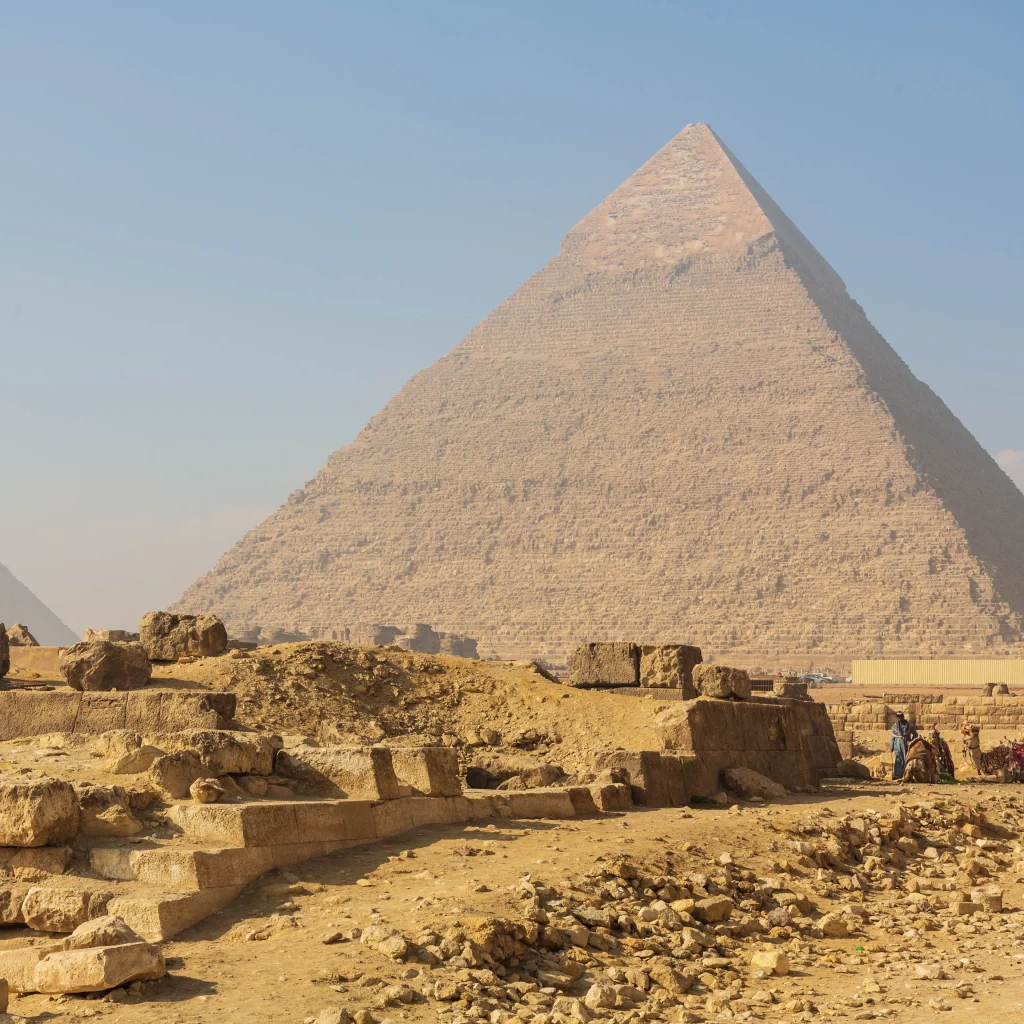
Khufu Pyramid
Why Visit the Great Pyramid?
Visiting the Great Pyramid gives travelers a chance to experience one of the most important monuments in human history. Beyond its size, the site stands out for its engineering precision, historical significance, and panoramic setting on the Giza Plateau.
- Largest pyramid in Giza
- One of the Seven Wonders of the Ancient World
- Easy to combine with the Sphinx and nearby pyramids
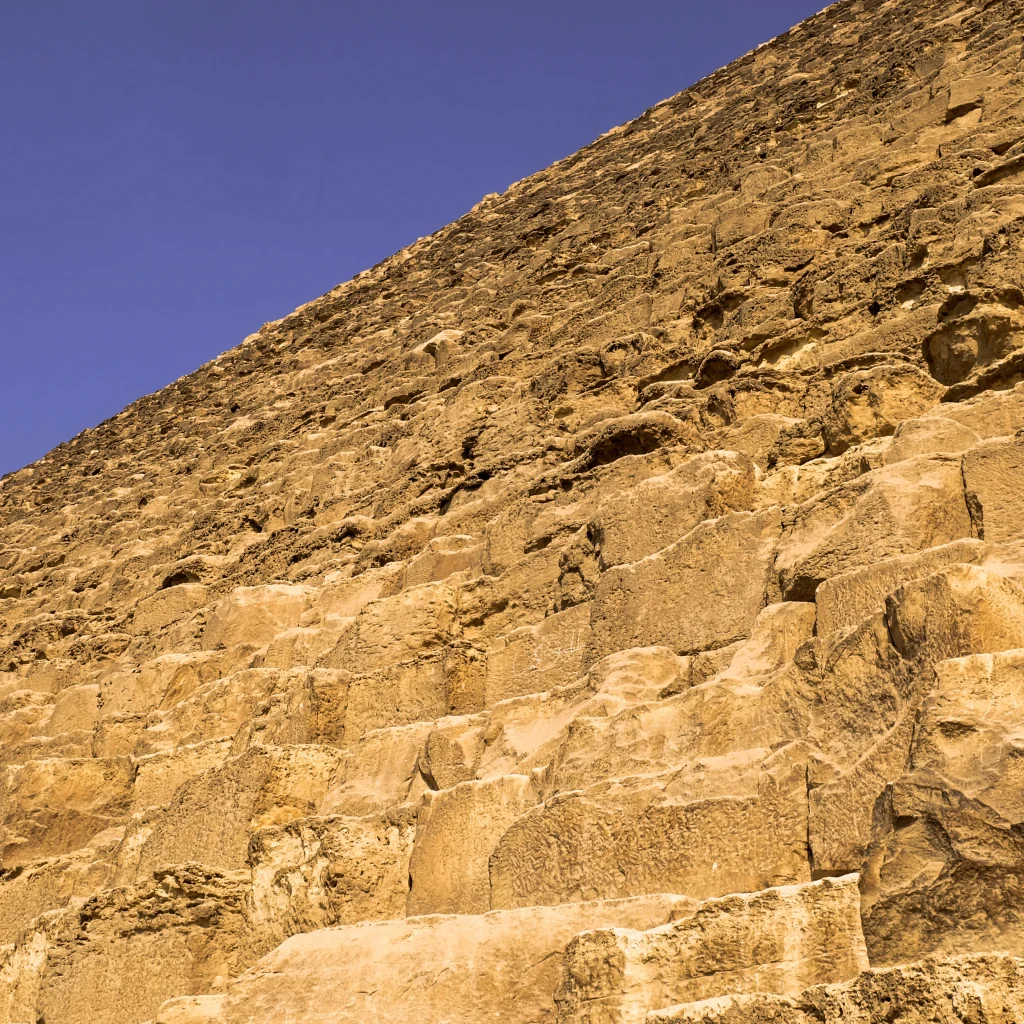
Inside the Pyramid
- King’s Chamber: 10.45m × 5.20m × 5.80m, red Aswan granite, empty red granite sarcophagus
- Grand Gallery: 47m long, 8.5m tall, 26-degree incline — physically demanding
- Queen’s Chamber: misnomer (never used for a queen), corbelled ceiling
- Air Shafts: aligned toward Orion’s Belt and Sirius
- Physical fitness note: 1.2m clearance at base, steep 40m ascent — not suitable for claustrophobia
- ScanPyramids 2023: 9-meter hidden corridor discovered near north face
It also holds true that to enter the Pyramid of Cheops means to witness the ingenuity of the skills of ancient Egyptians. This involves a difficult route that entails a series of tunnels that move up and down to finally arrive at the spot where the final grave of King Khufu was located, although the final grave of king Khufu, or his tomb, was yet to be found. In the architectural ingenuity involved in the tunnels, there appears to be genius as well as the will to deliver a message. Furthermore, initially, the pyramid was made entirely of bright and smooth Tura limestone that came from the other side of the Nile River. This shone so brightly that it illuminated the whole horizon. It was this massive size combined with this breathtaking view that made the Great Pyramid of Khufu one also known as the pyramid of khufu the pyramid is one of the seven wonders of the. Visitors can capture stunning photos inside and outside the pyramid, with incredible angles showcasing the massive limestone blocks and architectural genius.
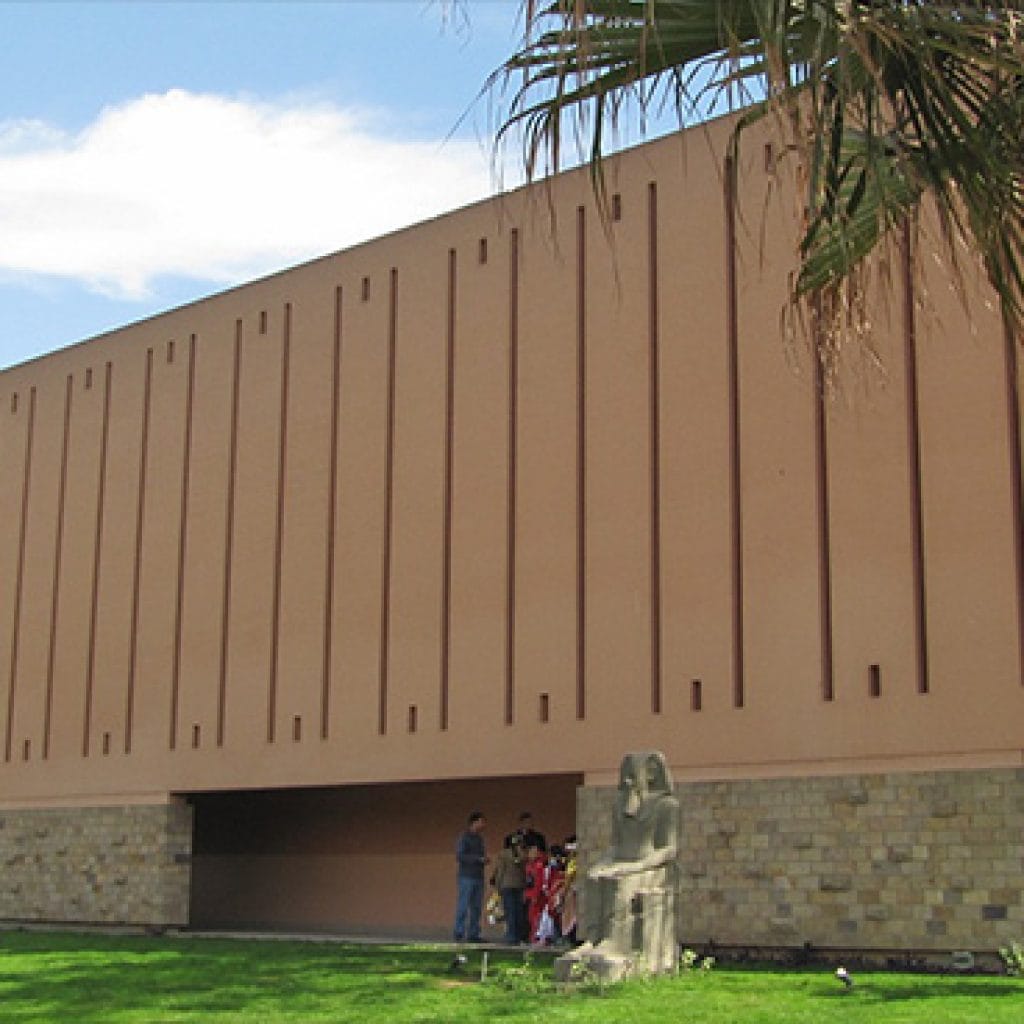
The Khufu Solar Boat Museum
- 143-foot cedarwood boat, assembled from 1,224 pieces
- Discovered 1954 in sealed pit at pyramid’s south side
- Believed to carry the pharaoh’s soul in the afterlife
- Purpose-built museum; new glass museum opened 2022
Practical Tips for Your Visit:
- Early Morning or Late Afternoon visits can be avoided in case of Heat & Crowds.
- Wear comfortable walking shoes to traverse the terrain.
- Bringing water, sunblock, and a hat, especially during warmer months.
- Entry and internal tickets must be purchased, if possible, before arrival.
- 2 to 3 hours to visit the pyramid and Giza Plateau
- Don’t miss: Sphinx & surrounding pyramids
Ticket Prices and Opening Hours
- Plateau ticket: 700 EGP (includes all 3 pyramids + Sphinx)
- Interior of Great Pyramid: 400 EGP additional
- Solar Boat Museum: 100 EGP additional
- Hours: 8 AM–5 PM (winter), 8 AM–4 PM (summer)
- Note: card payments now accepted; limited interior tickets per day sold at gate
Visiting tips
A visit to the Pyramid of Khufu Egypt contains more than the analysis of historical aspects. It also involves enjoying one of the most beautiful spots around the globe. Found at the foot of the Giza Plateau, this pyramid offers one of the most spectacular scenes for panoramic view experiences in Egypt. These scenes include the desert found at the rear of the pyramid as well as the view of the skyline of Cairo in the distance. It also offers one of the best photo opportunities where one can take stunning photos of the pyramid from different angles.
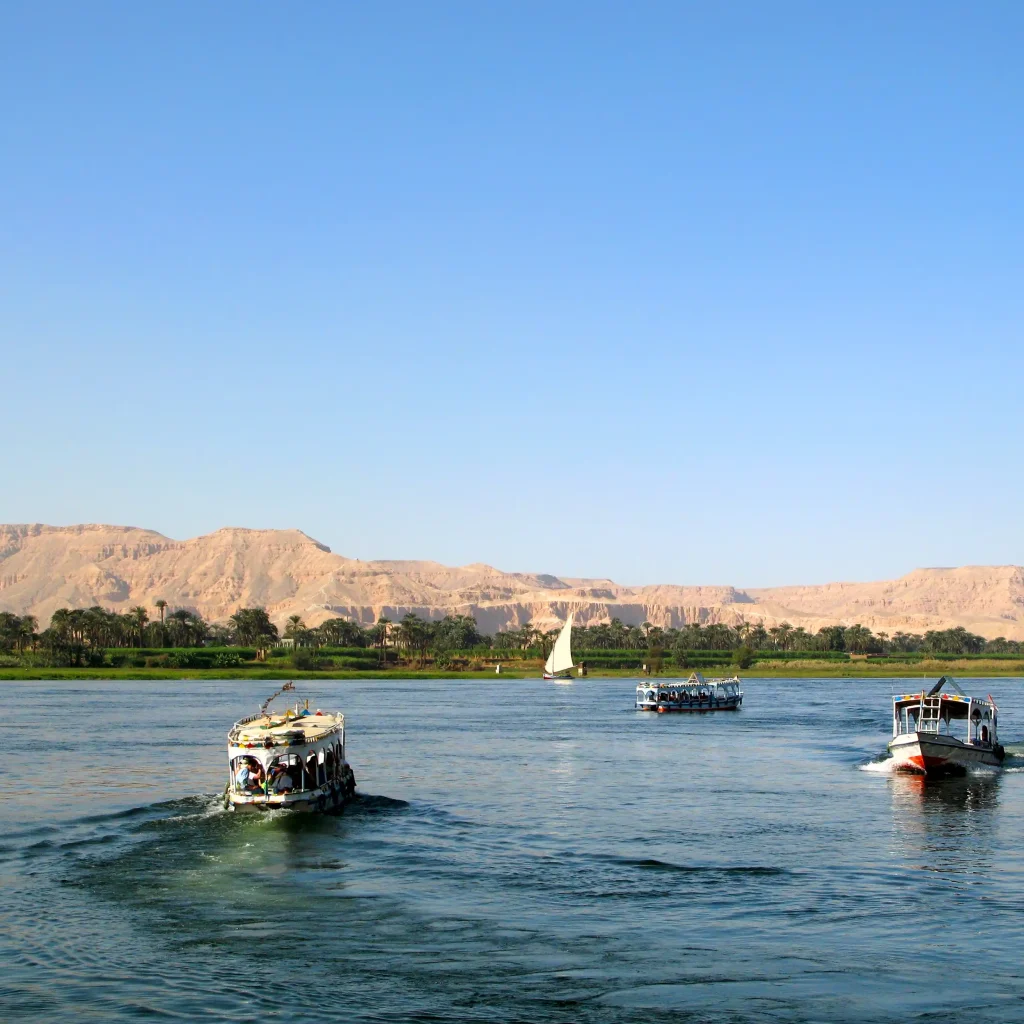
Many travelers who visit the Great Pyramid of King Khufu also continue south on one of our Egypt Nile cruises from Cairo.
Start your adventure here – see all the details:
- 10 Days Cairo and Nile Cruise Tour
- 8 Days Cairo and Nile Cruise Tour
- 7 Days Cairo and Nile Cruise Tour
- 10 Days Hurghada, Cairo & Nile Cruise Package
- 9 Days Cairo and Nile Cruise Tour
The Great Pyramid is more than a landmark it is one of the most rewarding places to visit in Egypt for travelers who want history, scale, and iconic views in one stop.
FAQs
Yes, visitors can go inside the Great Pyramid of Khufu, but access is usually limited and may require a separate ticket. The interior is narrow, steep, and quite warm, so it may not be comfortable for everyone. While the inside is historically fascinating, many travelers find that the real highlight is seeing the pyramid’s scale and structure from the outside.
The best time to visit Giza is early in the morning or later in the afternoon. These times are usually more comfortable because temperatures are lower and the light is better for photos. Visiting earlier in the day can also help you avoid the largest crowds, especially during busy travel seasons.
The pyramid is situated in Giza, which is a suburb of Cairo. The pyramid can be accessed through the use of a car, taxi, or an organized visit. Many people who visit this site have a tendency of opting for an organized visit so as to make it easy for them to visit the pyramid, while others use personal cars. The roads accessing this site are in good condition.
Of course! A visit to the Pyramid of Khufu will be an experience that you will live once in a lifetime, putting you right into the success that the Egyptians had achieved. The pyramid itself is just a sight that leaves one in awe of its precision and history. Not just a nice sight, it also provides facts about civilizations that existed back then and their knowledge about some of the branches of astronomy.
Most visitors need around 2 to 3 hours to explore the Great Pyramid area comfortably. This gives you enough time to see the pyramid up close, take photos, enjoy the views across the Giza Plateau, and visit nearby attractions such as the Sphinx. If you plan to enter the pyramid or explore the entire Giza complex, you may want to allow more time.
Yes, the Great Pyramid is included in many Cairo day tours, especially those that cover the Giza Pyramids and the Sphinx. Some tours also combine Giza with other attractions in Cairo, such as the Egyptian Museum or Old Cairo. If you want a smoother experience, choosing a guided tour can help you make the most of your time and understand the site’s history more clearly.
2.3 million, 2–15 tons each
20 years, 2580–2560 BCE
Going inside the Pyramids of Giza is worth it for the unique thrill of being inside a world wonder
a specialized, humidity-controlled, two-level structure located on the Giza Plateau, south of the Great Pyramid, dedicated to housing the 4,600-year-old cedar-wood solar barque of Pharaoh Khufu
an international scientific mission led by Cairo University and the HIP Institute (France) to non-destructively explore Egypt’s Old Kingdom pyramids





0 Comment