
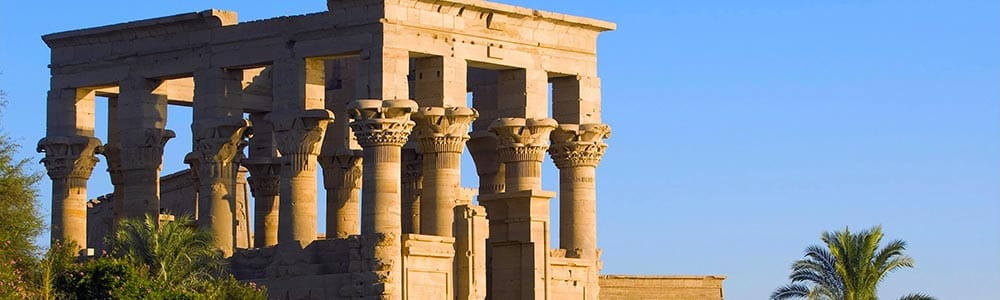

Why Philae Temple Is One of Egypt’s Most Enchanting Sites
Rising from the waters of the Nile near Aswan, Philae Temple stands as a powerful symbol of devotion, resilience, and ancient belief. Dedicated to Isis—the goddess of love, magic, and motherhood—this island sanctuary was one of the last active pagan temples in Egypt, remaining sacred well into the Christian era.
Today, on Agilkia Island, Philae Temple captivates visitors with its combination of myth, architecture, and stunning riverside views. From intricately carved reliefs to dramatic sunsets over the Nile, a visit to this site offers both cultural depth and natural beauty.
Visiting Philae Temple Aswan is more than sightseeing; it’s walking through a storybook of Egyptian myths, architectural genius, and historical perseverance.
Quick Facts
- Location: Agilkia Island, near Aswan
- Dedicated to: Isis, goddess of magic and motherhood
- Period: Ptolemaic and Roman eras
- Time needed: 1–1.5 hours
- Tickets/Entry: Entrance ticket required + boat transfer
- How to get there: Motorboat from Aswan marina
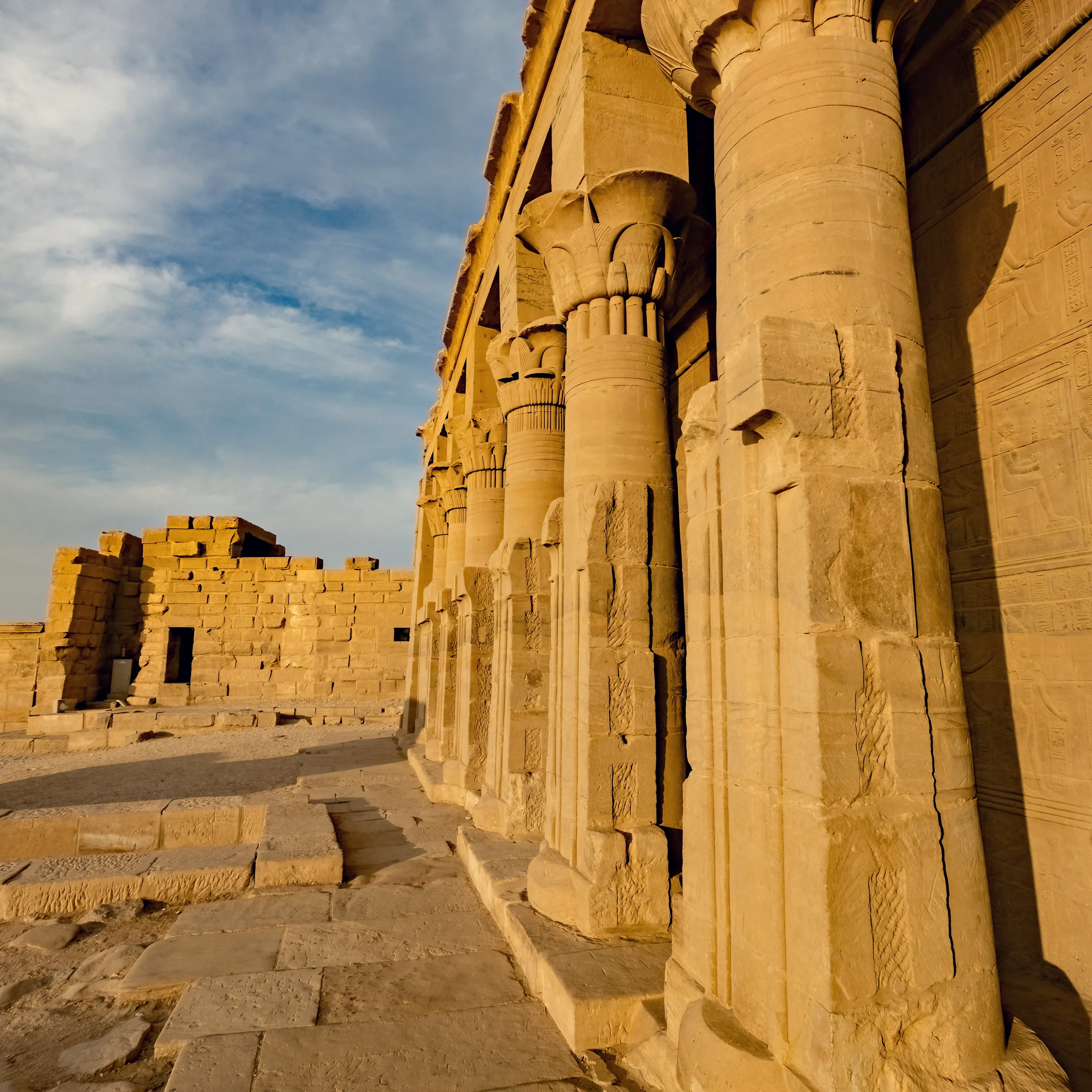
- Top highlights: First Pylon, Hypostyle Hall, Inner Sanctuaries
- Extra experience: Evening sound and light show
What Makes Philae Temple Unique
- Dedicated to Isis, one of Egypt’s most beloved deities.
- Dramatic island setting on the Nile, perfect for photography.
- Exceptionally detailed reliefs and inscriptions that tell myths of gods and pharaohs.
- Successfully relocated to save it from flooding caused by the Aswan High Dam.
- One of the last pagan temples in Egypt to remain active, bridging the ancient and Christian eras.
A Temple Rescued from the Waters
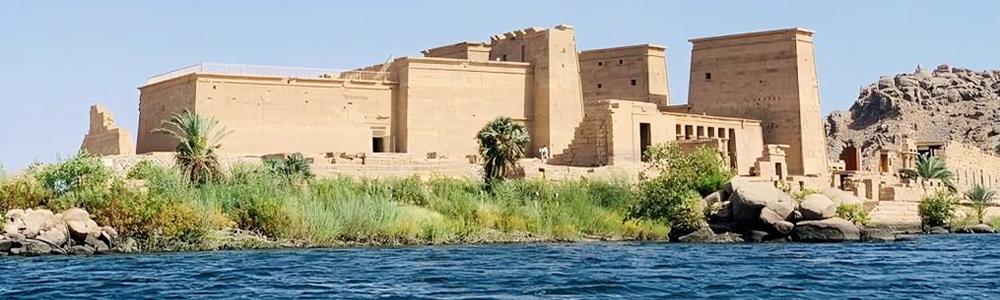
Originally located on Philae Island, the temple complex faced destruction after the construction of the Aswan High Dam in the 1960s. Rising waters threatened to permanently submerge the site.
In a remarkable UNESCO-led operation, the entire temple complex was dismantled stone by stone and rebuilt on nearby Agilkia Island. This monumental rescue preserved the temple of Isis for future generations, making it one of the most significant achievements in archaeological conservation history.
The relocation not only saved the temple but also enhanced its scenic setting. Today, visiting Philae Temple is both a historical and a visual delight.
Architecture, Myths, and Sacred Meaning
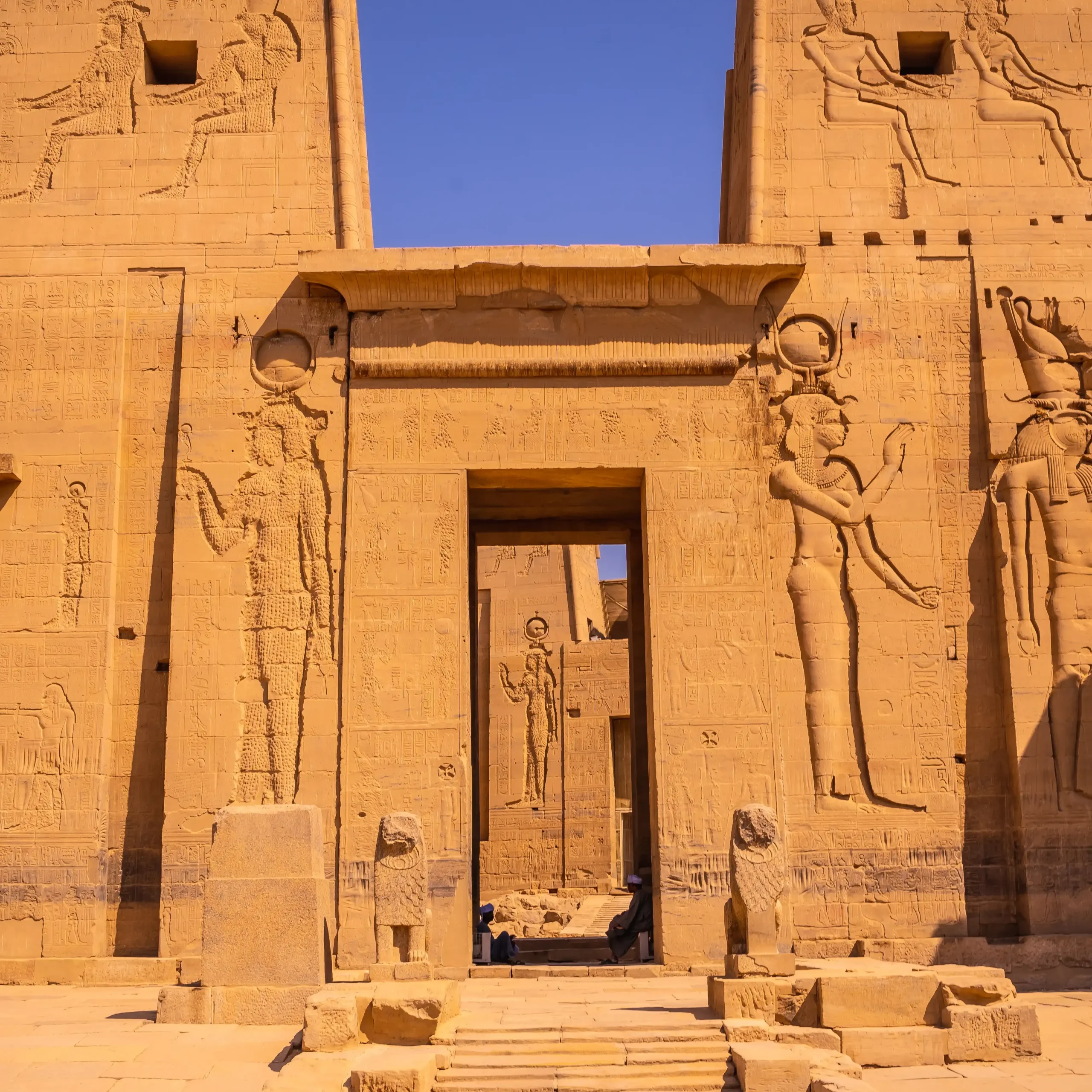
Visitors enter through the First Pylon, a massive gateway decorated with reliefs showing Ptolemaic rulers offering gifts to the gods. Beyond it lies the Hypostyle Hall, with intricately carved columns and scenes depicting mythology, divine rituals, and royal ceremonies.
The inner sanctuaries reveal some of the most sacred spaces of the ancient world. The temple walls tell the myth of Osiris, Isis, and Horus—a tale of death, resurrection, and divine justice. Even after the spread of Christianity in Egypt, Philae remained revered, with some chapels converted into churches, reflecting the temple’s layered spiritual significance.
Every corner of the temple combines myth, history, and artistry, making it one of the most captivating Isis temples in Aswan.
How to Visit Philae Temple
- Getting There
The temple is accessible only by motorboat from Aswan’s riverbanks, which makes the journey an integral part of the experience. The ride offers scenic views of the Nile and the surrounding islands, creating a sense of anticipation before you even set foot on the temple grounds. - Tickets
An entrance ticket is required for visiting, and boat transfers are paid separately. Most operators sell combined packages that include both entry and boat ride. - Best Time to Visit
Morning: Cooler temperatures and fewer crowds.
Evening: Ideal for the Philae Temple sound and light show, which brings the myths and history to life with dramatic lighting and narration.
Visiting Tips
- Arrive early to avoid heat and crowds.
- Bring cash for boat transfer fees.
- Wear comfortable walking shoes for uneven surfaces
- Photography is allowed, but avoid flash inside sensitive areas.
- Plan ahead for the evening sound and light show, as timing is essential.
- Use sunscreen and a hat for sun protection.
- Allow time for the boat ride, as it’s part of the experience.
- Visit at sunset for magical views over the Nile.
Top Highlights of Philae Temple
- First Pylon: Majestic gateway decorated with intricate carvings.
- Hypostyle Hall: Columns covered in mythological reliefs.
- Inner Sanctuaries: Sacred spaces dedicated to Isis.
- Temple Reliefs: Stories of gods, pharaohs, and rituals.
- Evening Sound & Light Show: A dramatic retelling of Philae’s myths and history.
FAQs
Q1: Where is Philae Temple located today?
A: On Agilkia Island near Aswan, after its relocation from Philae Island.
Q2: Why was the temple moved?
A: To protect it from flooding caused by the Aswan High Dam.
Q3: How do you reach Philae Temple?
A: By motorboat from Aswan’s riverbanks.
Q4: Is the sound and light show worth it?
A: Yes, it offers a dramatic retelling of the temple’s myths and history.
Q5: How long should I spend visiting Philae Temple?
A: Approximately 1–1.5 hours, plus extra time if attending the evening show.
Q6: Can I combine Philae Temple with other Aswan attractions?
A: Absolutely. Many visitors include the Nubian Village, Unfinished Obelisk, or Aswan High Dam in the same day itinerary.



0 Comment